
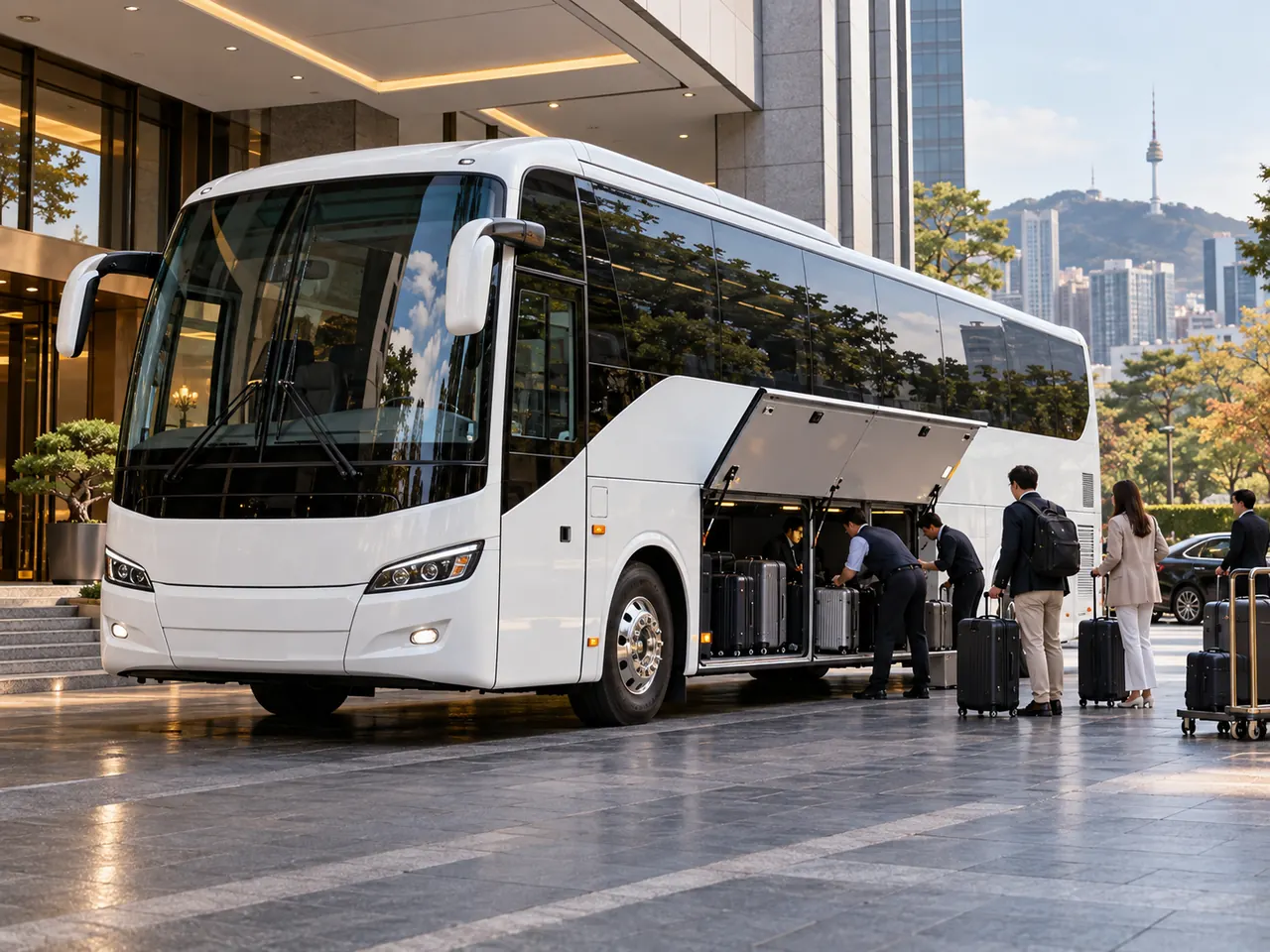
When a coach works well in Seoul
Private group travel in Seoul works best when vehicle size, luggage, access and timing are planned together. A coach is normally considered for larger touring parties, event transport and multi-stop city programmes. The right choice depends on confirmed passenger numbers, luggage volume, pickup access, journey duration and whether the vehicle remains with the group during the day. For airport work, allow for suitcases and equipment rather than choosing purely by seat count. For sightseeing, business programmes or events, the timetable should include realistic loading time at hotels and venues. For 37–46 seater coach hire enquiries, send the whole itinerary: pickup address, destination, date, passenger count, luggage, intermediate stops and any fixed arrival times. That gives the operations team enough information to assess whether a coach is suitable or whether a different configuration would be more practical. Vehicle specifications and amenities vary by supplier and should be confirmed for each booking rather than assumed from the category name alone.
Airport transfers, city work and regional journeys
In central Seoul, groups often combine hotels in Myeongdong, Gangnam, Hongdae, Jongno or Jamsil with palaces, shopping districts, restaurants and evening events. A coach can also be used for Incheon or Gimpo airport transfers when the capacity matches both passengers and bags. For longer journeys outside Seoul, the itinerary should show planned rest stops, attraction reservations and final return timing so driver hours and route planning can be reviewed before confirmation. Groups travelling to Nami Island, Suwon, Everland, Paju, Chuncheon or other regional destinations should avoid treating the vehicle as an unlimited waiting service. State how long the group expects to remain at each stop and whether the driver and vehicle need to stay nearby. That helps produce a clearer quote and reduces last-minute changes. Where large luggage, sports equipment, exhibition materials or mobility requirements are involved, mention them at the enquiry stage.
What to include in your quote request
For a useful quotation, send the travel date, passenger count, pickup and destination, all planned stops, approximate luggage volume and the service window. If the trip involves several days, list each day separately. For events, note the expected finish time and whether departures are staggered. For conferences, identify hotels and delegate groups. For schools or universities, identify supervising staff and any equipment. Clear information allows the transport plan to be matched to the actual programme instead of relying on assumptions.
Seoul access, timing and waiting
Central Seoul has a mix of broad arterial roads and smaller streets around heritage, retail and nightlife districts. Coaches cannot always stop exactly where a car can, so pickup instructions may specify a nearby loading point. Busy areas around palaces, Myeongdong, Hongdae, Gangnam and major stadiums can also require extra time at peak periods. The quoted service should therefore be based on the practical operating window, not just the distance shown on a map.
Private tours and multi-stop itineraries
Private transport is especially useful when a group wants to combine several places without splitting across taxis or public transport. A typical day may include a hotel pickup, a palace district, lunch, a museum or market and an evening viewpoint. Regional days can combine attractions in Gapyeong, Suwon, Paju or Chuncheon. The itinerary should still leave enough time for walking, meals and attraction entry rather than using every minute as driving time.
Business, events and delegate movements
Seoul hosts frequent corporate programmes, conventions, exhibitions, product launches and sporting events. Group transport can be organised as one coach, several coordinated vehicles or repeated shuttle loops. For multi-vehicle work, consistent passenger lists, hotel assignments and contact details help keep departures organised. Large movements should also identify a lead coordinator who can communicate with the transport team if the event schedule changes.
Booking notes
A quotation should state the agreed vehicle category, itinerary and service period. Final vehicle make and amenities can vary, so any essential requirement should be written into the request. Changes to passenger numbers, pickup points or operating hours can affect the suitable vehicle and price. Before travel, confirm the final itinerary and the meeting instructions supplied for the driver. If severe weather, road controls or venue restrictions affect safe operation, the transport plan may need to be adjusted.